In 2013, something very unusual happened off the coast of Gwadar, Balochistan. After a powerful earthquake struck the region, a small island suddenly appeared in the Arabian Sea. People nearby were shocked because it was something they had never seen before in their lives.
This island later became known as Zalzala Koh, which means “Earthquake Mountain” in Urdu.
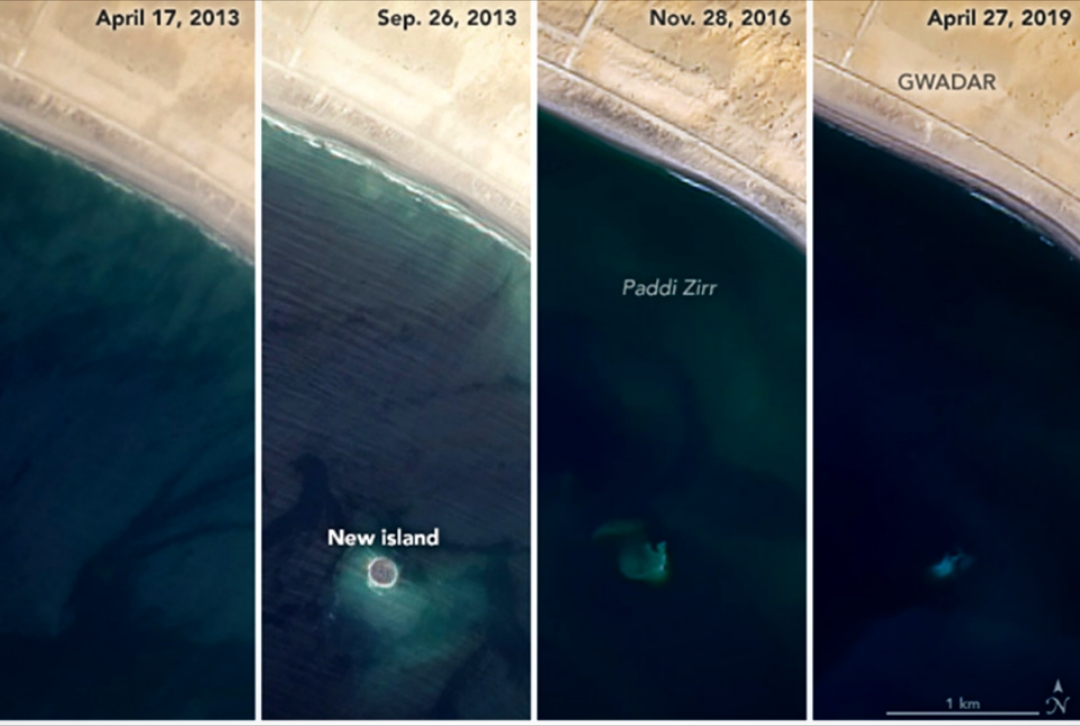
The island appeared on 24 September 2013, just after a strong earthquake hit Awaran district in Balochistan. The earthquake was powerful enough to change the shape of the seabed. Mud, rock, and gases from deep under the earth were pushed upward, forming a new landmass in the sea.
At first, the island looked like a miracle. It was visible from the coast, and fishermen and locals rushed to see it. Some people even thought it could become a permanent island in the future.
But scientists explained the reality. They said the island was not made of solid rock. Instead, it was formed mostly from mud, sand, and methane gas. This type of formation is called a mud volcano island, and it is usually weak and unstable.
Because of this, the island could not survive for long. Over time, strong waves from the Arabian Sea started breaking it down. Rain and natural erosion also weakened its structure.
By around 2016 to 2017, most of Zalzala Koh had already disappeared back into the sea. What once looked like a new land in Pakistan slowly faded away and is now almost gone.
Today, only memories and a few pictures remain of this strange natural event. Zalzala Koh is still remembered as one of the most fascinating geological surprises in Pakistan’s recent history.
It showed how powerful nature can be, creating land in a moment and taking it away just as quickly.