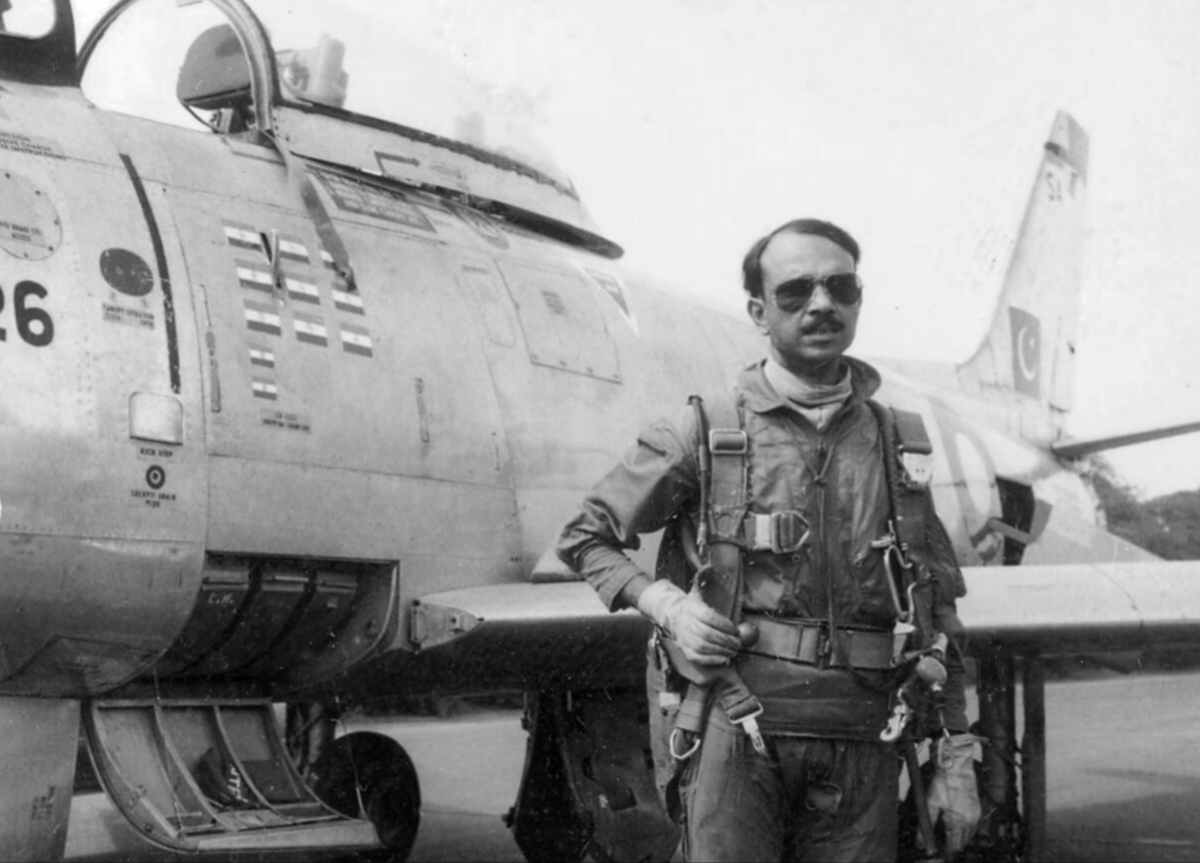
A Name Known Beyond Borders
In Pakistan, Air Commodore Muhammad Mahmood Alam is a household name, often spoken with pride and emotion. Outside Pakistan, his name is not always familiar to the general public, yet within military circles and aviation history, MM Alam is far from unknown. His story travels quietly across borders, appearing in professional discussions, air force records, and debates among defense analysts. The respect he receives abroad is usually calm, factual, and rooted in performance rather than emotion.
Recognition in Professional Military Circles
Outside Pakistan, MM Alam is primarily remembered in air force academies and military history studies as a highly skilled fighter pilot from the 1965 Indo Pakistan war. His claim of shooting down five Indian aircraft in a single combat mission is one of the most discussed air combat events in South Asian military history. Internationally, this achievement is often mentioned with careful wording. Many foreign analysts describe it as an extraordinary claim that stands out due to its rarity in jet age warfare.
Air warfare experts in the United States, Europe, and Asia tend to focus on the tactical environment of the 1965 war. They examine the aircraft involved, mainly the F 86 Sabre flown by MM Alam and the Hawker Hunter used by the Indian Air Force. In these discussions, MM Alam is acknowledged as an aggressive and confident pilot who operated effectively under intense pressure. Even when debates arise about exact numbers, his skill is rarely questioned.
How Foreign Analysts Discuss His Famous Dogfight
In international defense publications and forums, MM Alam’s combat is often used as a case study rather than a legend. Analysts discuss formation flying, energy management, surprise elements, and the chaos of dogfights. The tone is analytical, sometimes skeptical, but not dismissive. The fact that his claims are debated actually keeps his name alive in global military conversations.
Some foreign historians note that multiple kills in a single mission were more common in propeller driven aircraft wars, such as World War Two, and extremely rare in jet combat. Because of this, MM Alam’s case attracts attention whenever air combat records are reviewed. Even when confirmation standards differ, his performance is seen as exceptional for the era.
Presence in Aviation Literature and Archives
MM Alam’s name appears in international aviation books, air combat studies, and historical archives that document Cold War era conflicts. He is often listed among notable non Western fighter aces, a category that includes pilots from Asia, the Middle East, and Africa. This placement itself reflects recognition, as many pilots from developing nations rarely make it into global military literature.
In some Western writings, he is described as a disciplined officer who valued professionalism over publicity. This image aligns with accounts of his later life, where he lived quietly and stayed away from political or media attention. Such details resonate with foreign readers who tend to respect restraint more than self promotion.
India’s Perspective and Regional Memory
Across the eastern border, MM Alam is remembered in a very different way. Indian military narratives rarely celebrate him, but they do not ignore him either. Indian analysts often acknowledge that Pakistan produced capable pilots during the 1965 war and MM Alam is frequently mentioned in that context. His claims are challenged, yet his role in the conflict is recognized as significant.
This contrast in narratives is common in post war histories around the world. Outside South Asia, observers often find this disagreement natural rather than surprising. It adds complexity to MM Alam’s international image and keeps discussions about him alive decades after the war.
Respect Without Idolization
One noticeable difference between how MM Alam is remembered at home and abroad is the tone. Outside Pakistan, he is respected but not idolized. He is seen as a professional soldier who performed his duty exceptionally well during a limited period of conflict. There are no grand monuments or public celebrations in foreign countries bearing his name, but there is quiet acknowledgment in classrooms, journals, and expert panels.
This kind of recognition may lack emotion, but it carries weight. In military culture, being studied and debated long after retirement is a form of respect that few achieve.
Why His International Memory Still Matters
MM Alam’s international reputation matters because it places Pakistan’s military history into a global context. It reminds the world that skill and courage are not limited by geography. His story shows that pilots from developing nations can shape air combat history and command attention from the most advanced military thinkers.
For younger generations reading foreign analyses or aviation history books, MM Alam appears not as a myth but as a serious figure worth examining. That balance between admiration and scrutiny is perhaps the most honest form of remembrance.
A Legacy That Quietly Endures
Outside Pakistan, MM Alam is not a slogan or a headline. He is a chapter, sometimes a footnote, sometimes a case study, but never entirely absent. His name continues to surface wherever the 1965 air war is discussed or where rare air combat achievements are analyzed. In a world where attention is often loud and fleeting, this quiet endurance may be the strongest proof of his lasting impact.